
· by Michael Blair, Nashville's Appliance Repair
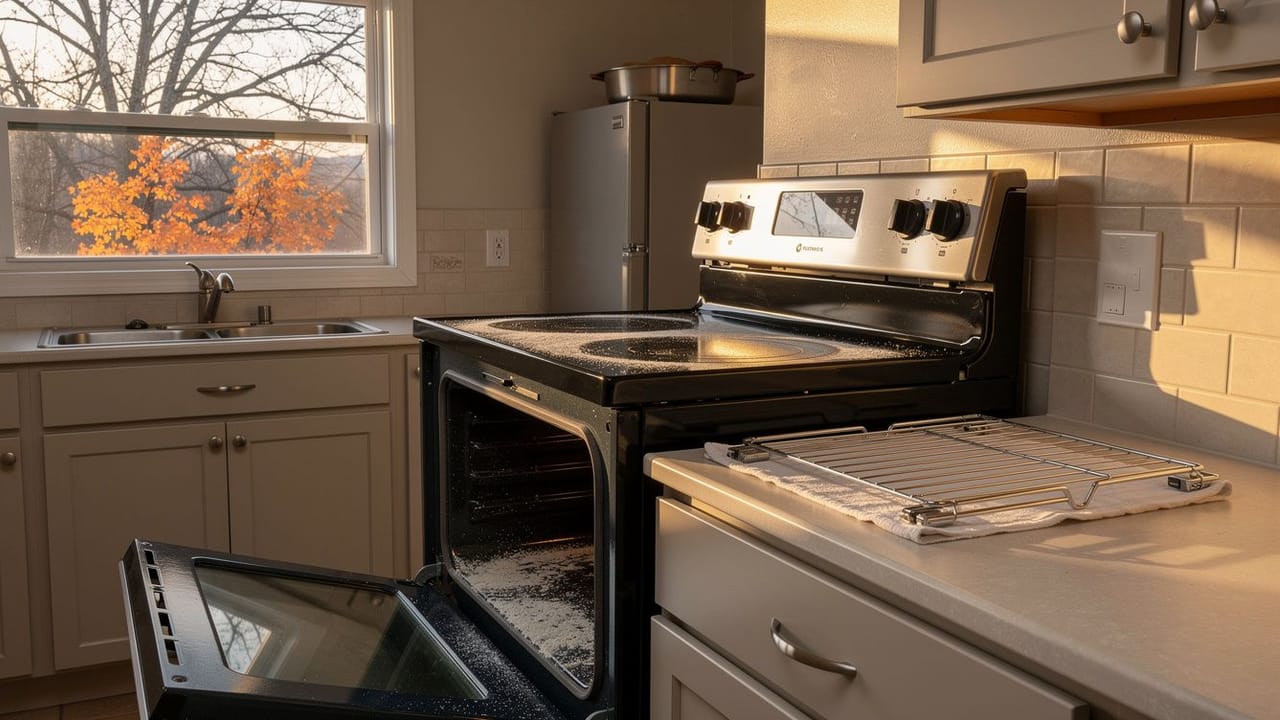
The self-cleaning cycle locks the oven door and uses very high temperatures to burn soil down to a powdery ash, as Whirlpool’s guide to its high-temperature self-clean cycle describes it. It works, and the manufacturers publish how to run it. What we would change is when people run it. The oven is out of use until it has cooled, the door can stay locked if the lock does not let go, and the parts packed around the oven box sit in that heat along with the grime. If one of them was already worn, we would much rather find out in October than on Thanksgiving morning, and that is why the fall is the time to plan around it.
What does self-clean do to an older oven?
The heat that burns off spills does not stay inside the oven box. GE Appliances’ tips for self-clean note that many ranges and wall ovens run fans to cool their internal components during and after the cycle, and that the oven can take 30 to 90 minutes to cool down once the cycle is over. The door lock, the controls, the wiring and the elements all live in that heat. On a sound oven that is ordinary use. On one with a part that is already wearing, a clean cycle is a hard test of it.
The door lock is the part people notice first. GE explains that the door has to be locked for the cycle to run, and that some models have a mechanical latch you slide over by hand while others lock on their own. GE’s page on an oven door that will not unlock after self-cleaning walks through what to do when that lock holds on. And on gas ranges with a mechanical latch, a latch left in the locked position is one of the reasons a gas oven will not come on at all, according to GE’s checklist for a gas oven that will not come on.
What should you do instead before a holiday?
If the oven needs cleaning before a holiday, do it at least a few weeks early, so that if something does go wrong there is time to have it looked at and repaired before the cooking starts. Going earlier also makes for an easier clean: Whirlpool’s guide advises self-cleaning before the oven becomes heavily soiled, because heavy soil means a longer clean and more smoke.
Or skip the full cycle this year and wipe out what you can by hand once the oven is cold. Some newer ovens also have a second cleaning setting besides the high-temperature one; Whirlpool’s help page for its electric ranges points to one it calls AquaLift. Your owner’s manual says whether your oven has one and what kind of soil it is meant for.
If you do run the full cycle, GE’s tips say to take the racks out unless they are labeled Self-Clean or Never-Scrub, wipe out loose spills with a wet cloth first, and ventilate by opening windows or turning on the exhaust fan. Whirlpool’s electric range instructions add that the door has to be closed completely or it will not lock and the cycle will not start, that the oven vents must not be blocked, and that pet birds should be moved to another closed and well-ventilated room, since some birds are extremely sensitive to the fumes the cycle gives off.
- Run self-clean in September or October, not the week of
- Take the racks out unless they are labeled for self-clean
- Open windows or run the exhaust fan during the cycle
- Move pet birds to a closed, well-ventilated room away from the kitchen
- Wipe up big spills first so there is less to burn
Checks worth making now
Put an oven thermometer on the middle rack and see whether the oven holds what you set it to; our post on an oven that will not hold its temperature explains how to take the readings and what they mean. If the oven is off by the same amount every time, you may be able to correct it yourself. On GE ovens with a Settings pad, GE’s calibration steps move the set temperature up or down by as much as 35 degrees Fahrenheit in 1-degree steps, and the change leaves the broil and self-clean temperatures alone. Other brands do it differently, and the owner’s manual shows how. An oven whose readings swing or drift is a repair question, and October is a better month to ask it.
On a gas oven, set it to bake, open the door and look toward the back of the oven floor for the red glow of the igniter. GE’s checklist says that if there is no glow, the igniter, the oven controls or other electrical components may be at fault. Listen to it light as well. A boom, or a door that blows open, is delayed ignition, and GE’s guide to what is normal on a gas range lists it among the things to refer to a repair service. While you are cooking on top, note any surface burner that lights unevenly and mention it when you call; it is quicker to look at both on one visit.
If it fails anyway
If the door is still locked after a cycle, give it time first. Whirlpool’s guide says the door will not unlock until the oven cools, and GE puts the cool-down at 30 to 90 minutes, with the lock light possibly on the whole time. If it is still locked after that, GE’s steps are to disconnect power to the oven for 30 seconds, restore it and try the door; on a mechanical latch, slide it gently to the left. If it still holds, GE’s next step is another clean cycle of 1 to 2 hours, then about 30 minutes of cooling before trying again. Do not force the latch at any point. And not every mark after a clean is a fault: Whirlpool says the heating and cooling of porcelain on steel can cause discoloring, loss of gloss, hairline cracks and popping sounds, and that none of it affects how the oven performs.
If the oven is dead after a clean, check the breaker first, which is where GE’s checklist starts, and on a gas range with a mechanical latch make sure the latch is all the way over to unlocked. If it is still dead, that is a job for our oven and range repair service. When we come out to an oven that quit after a clean, we test the thermal fuse, the door lock and the control before we name a part. Send us the model number from the label on the oven, which the owner’s manual will help you find, and we can look up the parts for that oven before the visit, which matters more than usual in the weeks before a holiday.
Sources
- Whirlpool Product Help: High Temperature Self Clean Cycle Information — Very high temperatures burn soil to a powdery ash; clean before heavy soil; door will not unlock until the oven cools; porcelain discoloring, hairline cracks and popping are normal.
- Whirlpool Product Help: Using High Temperature Clean - Electric Range — Move birds to another closed, well-ventilated room; door must close fully to lock; do not block vents; AquaLift cycle.
- GE Appliances: Range & Wall Oven - Tips for Self Clean — Fans cool internal components during and after the cycle; 30 to 90 minutes to cool; remove racks unless labeled Self-Clean or Never-Scrub; wipe spills; ventilate.
- GE Appliances: Range & Wall Oven - Door Will Not Unlock After Self-Cleaning — Mechanical and automatic locks; disconnect power 30 seconds; rerun clean 1 to 2 hours and wait about 30 minutes; do not force the latch.
- GE Appliances: Gas Range & Wall Oven - Oven Will Not Come On — Check the breaker; self-clean latch left locked; no igniter glow points to the Glo-Bar, controls or other electrical components.
- GE Appliances: Gas Range - What is Normal Operation vs What Requires Service — A boom or a door blowing open is delayed ignition and a reason to contact service.
- GE Appliances: Range & Wall Oven - Calibrating Oven Using Settings and Options on Control — Set temperature adjustable up to 35 degrees Fahrenheit in 1-degree steps; does not affect broil or self-clean temperatures.
FAQ
Why to Skip Self-Clean the Week Before a Holiday — questions
Why did my oven stop working after self-clean?
Sometimes it has not failed at all. The door stays locked until the oven cools, which GE says can take 30 to 90 minutes, and on gas ranges with a mechanical latch the oven will not come on until the latch is moved back to unlocked. If it is still dead after that and the breaker is on, a part has failed, and we test the thermal fuse, the door lock and the control before naming one.
How do I unlock an oven door after self-clean?
Let the oven cool completely first. GE’s steps are to disconnect power for 30 seconds, restore it and try the door, and on a mechanical latch to slide it gently to the left. If it still will not release, GE suggests running the clean cycle again for 1 to 2 hours and waiting about 30 minutes before trying again. Never force the latch.
Is it safe to use self-clean on an older oven?
The manufacturers publish how to run the cycle, so using it is normal. Our advice for an older oven is about timing: run it weeks before you need the oven, take out racks that are not labeled for self-clean, ventilate the kitchen, and move pet birds to a closed, well-ventilated room away from the fumes.
Can you use the oven right after self cleaning?
Not until it has cooled and the door unlocks. Whirlpool says the door stays locked until the oven cools, and GE puts that cool-down at 30 to 90 minutes, with the lock light possibly on throughout. If the door still holds after that, GE’s first step is cutting power to the oven for 30 seconds.