
· by Michael Blair, Nashville's Appliance Repair
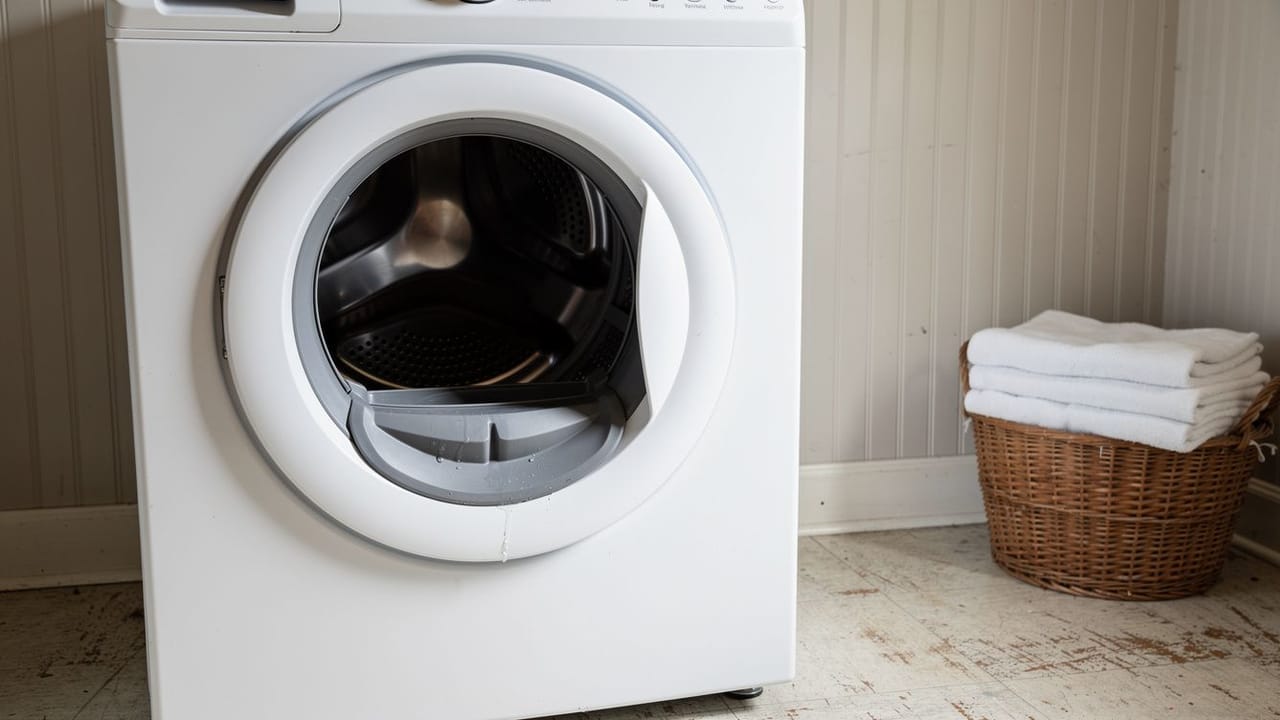
Front-loading washers use less water and spin faster than top loaders. ENERGY STAR’s comparison of front-load and top-load washers puts certified front loaders at about 50% less water than a top-load agitator machine, with a much faster spin to pull water out of the clothes. The same design leaves them damp inside between loads. A 2025 study of household washers in Frontiers in Microbiology found significantly higher microbial loads in front loaders than in top loaders, likely because of design features that hold water. The musty smell is usually bacterial biofilm, and it is manageable.
Where does the smell come from?
The door gasket, the large rubber bellows around the opening, has a fold at the bottom where water sits after a load; a 2024 review of washing machine biofilm in the journal Antibiotics notes that the inner door seal sometimes retains water once the cycle is over. The outer drum, the tub the visible drum spins inside, is where excess soap ends up. GE Appliances’ guide to odor in a front-load tub says too much detergent leaves soap trapped in the outer tub, where it builds up and causes odor over time. The detergent drawer is the third spot, and the same review found the highest diversity of microbes inside it.
None of these get hot enough on their own to clear the film. The review found bacteria were reduced but not sufficiently killed in low-temperature wash cycles, and a door kept shut stops the inside from drying. What is left is a damp, dark drum with residue in it, closed most of the day.
What makes a front loader smell worse?
Too much detergent is a common cause, and Whirlpool, GE and LG all list it. Whirlpool’s odor guide for front-load washers says to use only HE detergent and no more than the manufacturer’s recommended amount, because regular detergent or too much of it causes excessive suds. Fabric softener builds up the same way: LG’s help page on musty washer odors names too much detergent or softener as a cause, since either can leave residue behind. Washing only in cold water does little to shift it.
Shutting the door and the drawer right after the load is on LG’s list too, because it traps moisture and detergent residue inside. On a service call we also ask whether wet laundry sits in the drum for hours and whether the laundry closet door stays closed, since both keep the machine from drying out.
- Too much detergent, or non-HE detergent
- Too much liquid fabric softener
- Exclusively cold washes
- Door and drawer closed between loads
Clearing it
Start with the gasket. Pull the fold back and wipe the whole channel, getting into the bottom where the water sits; GE says the gasket can be wiped with mild detergent, diluted bleach or diluted vinegar, and we use one of those at a time, never two mixed together. Check the fold for anything caught in it while you are there. Remove the detergent drawer and scrub it and the opening it slides into, which Whirlpool says should be done regularly following the owner’s manual. Then clear the drain pump filter if your model has an accessible one: GE notes that small items can get through to the pump and restrict drainage, which adds to odors, and our post on why a washer will not drain covers where that filter usually sits.
Then run the tub clean cycle empty, with the cleaner your manual names, because this is where brands disagree. GE’s instructions for its BasketClean cycle call for 1 cup of bleach or a commercial washer cleaner, and on models without that cycle a large Heavy or Cotton cycle with nothing in the drum. Whirlpool’s Clean Washer cycle uses liquid chlorine bleach. LG warns that chlorine bleach or acidic cleaners on its Tub Clean cycle can discolor or corrode the interior, so an LG gets a drum cleaner instead. An established smell may not clear in one run, so give it a few loads before judging.
Keeping it away
Leave the door open, or at least ajar, between loads so the interior dries; Whirlpool recommends it to help avoid the buildup of odor-causing residue. Leave the drawer pulled out as well, since LG counts a closed drawer as part of the problem. Use HE detergent at the amount the bottle and the manual give, and go easy on liquid softener. Run the tub clean cycle once a month, which is what Whirlpool and GE advise, while LG says one to two times a month. A hot load now and then, even just towels, is a habit we keep for the reason the review gives about cool cycles. A quick wipe of the gasket after the last load of the day is worth it when the machine lives in a closet, and the other machines in the house get their turn in our post on appliance maintenance worth doing.
If the smell comes back fast despite all that, look at the drain. GE warns that a drain hose pushed too far into the standpipe can siphon drained water back into the washer and cause a musty odor, and its fix is to clip the hose to the side of the standpipe. A drum that is not draining fully is the other suspect, and that is when it becomes a job for our washer repair service rather than a habit. To have us take a look, request a free estimate.
Sources
- ENERGY STAR, Which Clothes Washer Should I Choose: Front Load or Top Load? (2024) — Certified front loaders use about 50% less water than top-load agitator washers and spin much faster
- Whitehead et al., Microbial cross contamination in household laundering and microbial ecology of household washing machines, Frontiers in Microbiology (2025) — Front loaders carry significantly higher microbial loads than top loaders, likely from design features that retain water
- Osta-Ustarroz, Theobald and Whitehead, Microbial Colonization, Biofilm Formation, and Malodour of Washing Machine Surfaces and Fabrics, Antibiotics (2024) — Door seal retains water after a cycle; highest microbial diversity in the detergent drawer; low-temperature cycles reduce but do not sufficiently kill bacteria
- GE Appliances, Front Load Washer - Odor in Tub — Excess soap trapped in the outer tub; gasket wiped with mild detergent, diluted bleach or diluted vinegar; pump filter; BasketClean with 1 cup of bleach; drain hose siphoning from the standpipe; monthly cleaning
- Whirlpool, Removing Odors or Smells - Front Load Washer — HE detergent at the recommended amount; clean the dispenser drawer; leave the door open between loads; Clean Washer cycle monthly with liquid chlorine bleach
- LG Electronics USA, Troubleshooting Musty Odors (2025) — Too much detergent or softener leaves residue; closed door and drawer trap moisture; no chlorine bleach or acidic cleaners on Tub Clean; drum clean one to two times a month
FAQ
Why a Front-Load Washer Smells and How to Stop It — questions
Why does my front load washer smell like mildew?
Usually it is bacterial biofilm in the door gasket, the outer drum and the detergent drawer, where detergent and softener residue builds up and a closed door keeps everything damp. Researchers have found more microbes in front loaders than in top loaders, likely because of design features that hold water, and cool wash cycles do not kill enough of them.
How do I clean the rubber seal on a front loader?
Pull the inner fold of the gasket back and wipe the whole channel, especially the bottom where water sits, with a cloth and mild detergent, diluted bleach or diluted vinegar, one at a time and never mixed. Check the fold for anything trapped in it, then dry it. We pair it with the monthly tub clean cycle.
Should I leave the washer door open between loads?
Yes. Whirlpool recommends leaving the door open between loads to help avoid the buildup of odor-causing residue, and LG lists a closed door and detergent drawer as a cause of musty odors because they trap moisture. Pull the drawer out as well so it dries.
Do all front load washers smell?
Not all of them, but they are more prone to it. A 2025 study found significantly higher microbial loads in front loaders than in top loaders, likely from design features that hold water. Leaving the door and drawer open, measuring HE detergent and running a monthly tub clean do a lot to prevent it.